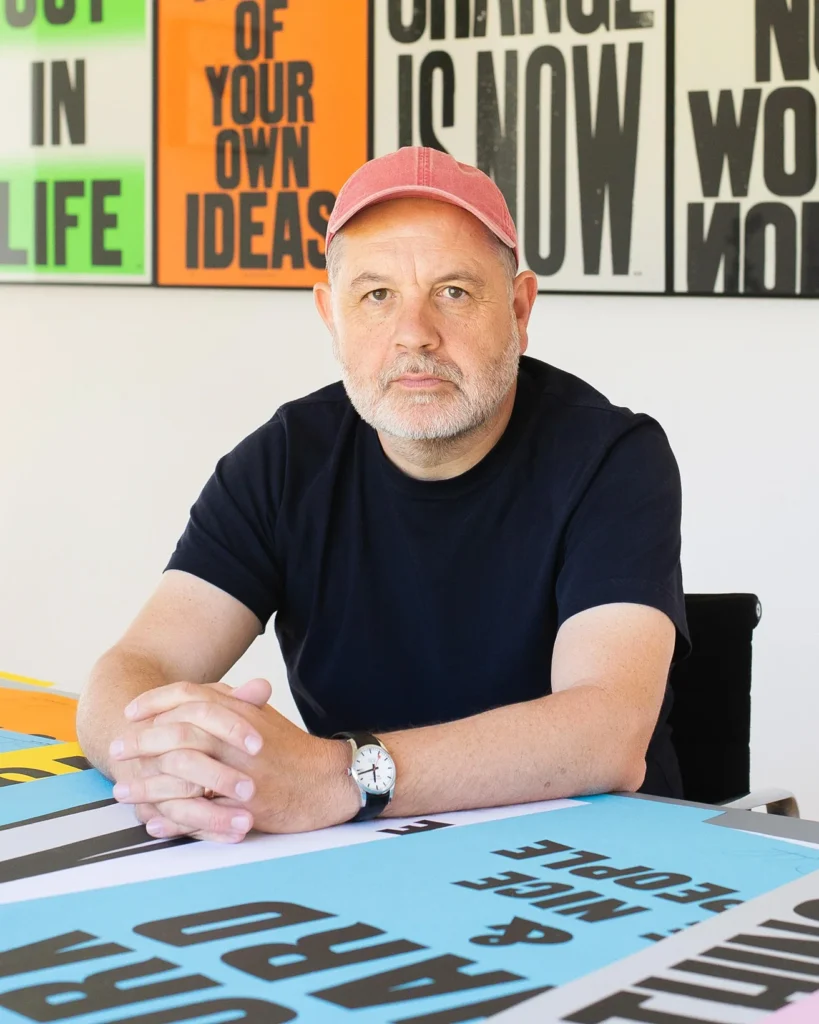
Few designers have mastered the art of saying more with less quite like Anthony Burrill. Known for his bold typographic prints and quietly optimistic messages, his work has become a kind of modern design folklore: simple, sincere and endlessly human. Two decades ago, Anthony traded city living for the calm of rural Kent, where he’s built a home and studio with his wife Emma and their Cocker Spaniel, Arthur. It’s also where they raised their two children, Rosie and Jack, whose creative paths continue to inspire him today.
In this conversation, we catch up with Anthony as he reflects on the realities of raising creative children, the influence of environment on creativity, and what it means to stay connected to your craft and your family as life moves through its different chapters.
Living in a small village in rural Kent must offer a different pace to city life. How has the environment affected your work and family dynamic?
Emma and I lived in London from 1989 until 2003. When our second child, Jack, was born, we decided to move to the countryside in search of a quieter life. We had both grown up in the countryside and wanted the same childhood experience for our children. At that time, remote working was just about possible, and we both felt the need to move to an environment that was connected to nature. We moved to a small cottage in the village, which was a short walk to the local school across a field and along a footpath through a wood. It was idyllic and made for a lovely start to every day. We quickly became part of village life as most activities were linked to the school.
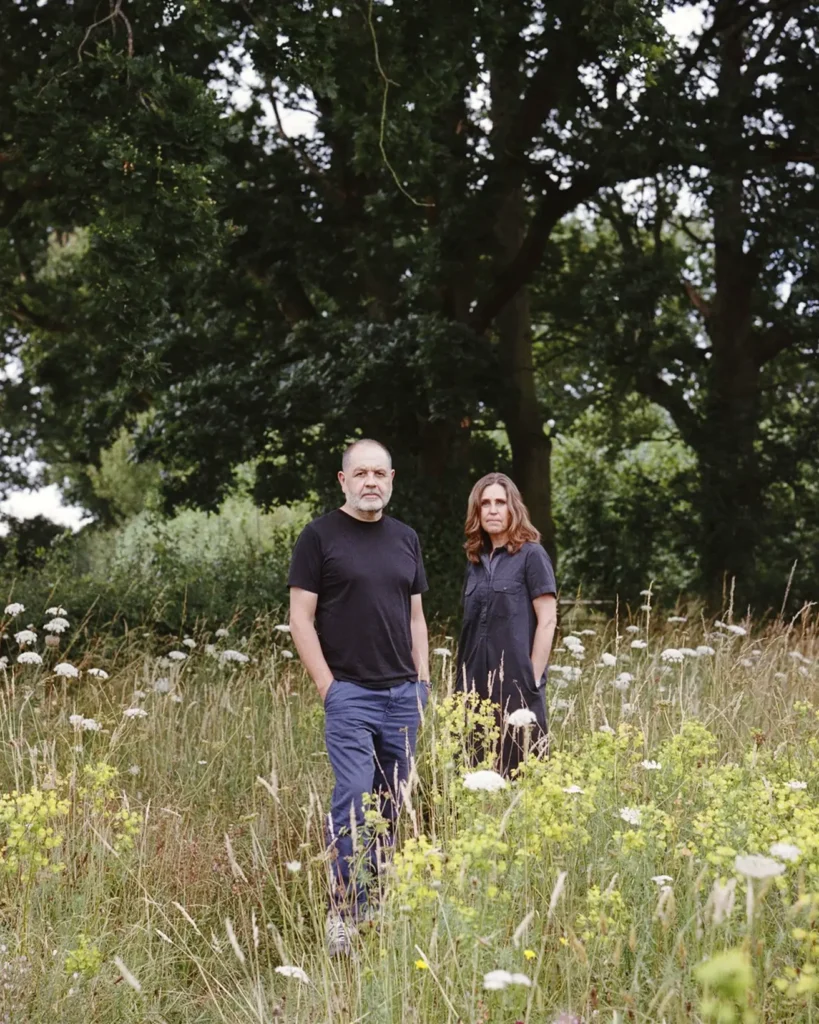
The children were both very young when we moved out and neither of them remember living in the city. When they both moved back to London they gravitated to the same area we had lived.
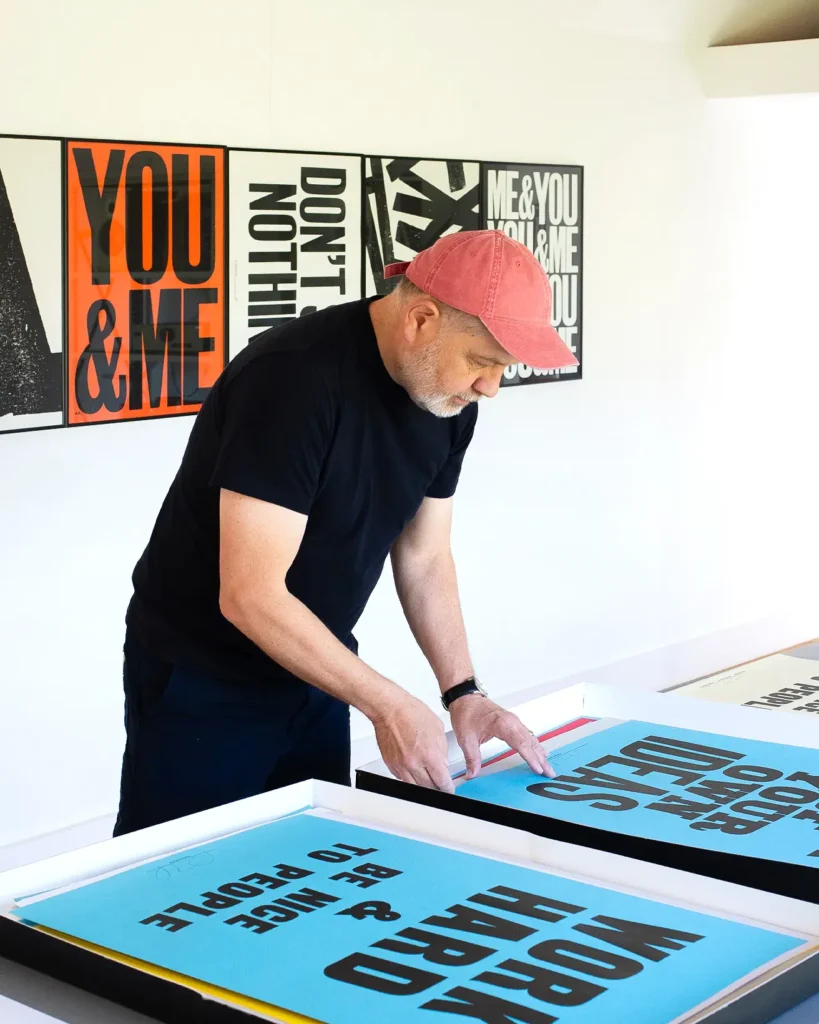
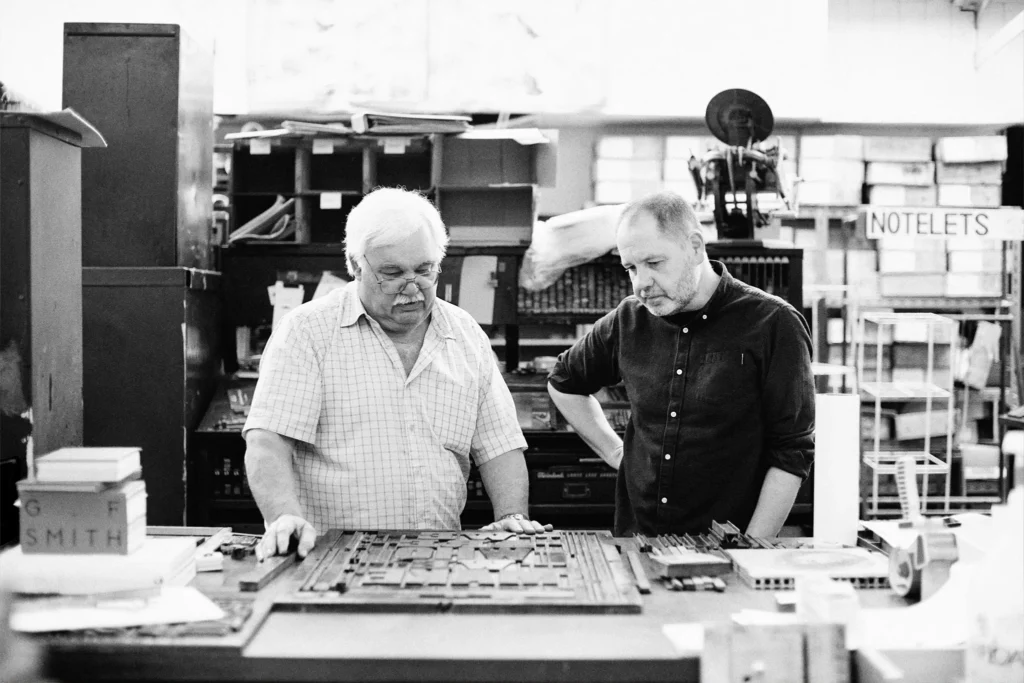
I feel that I became more focused on my work once we’d moved out of the city. Something about the quiet and pace of life in the countryside has informed my work. I began to work with a letterpress printer in our local town of Rye. This working relationship has had a huge impact on my work. It has helped to define who I am and shaped the work I make. Without our relocation to Kent, that chance meeting would never have happened.
With your children now in their 20s, how has your relationship with them evolved, especially in terms of discussing art, culture, or creative projects?
As a family, we’ve always had a very close relationship. We’re never happier than when we’re all together. Rosie and Jack are both amazing people who constantly surprise us with their humour, love and friendship. We all get on as people. The slow development of our relationships has deepened with each shared experience. They’ve taught us as much as we’ve passed on to them. They are both creative people and grew up in a lively, stimulating household. Emma and I have always worked from home and shared parenting as much as possible. When the children were little, our main focus was on them and our lives together. It was something we did naturally and was part of how we all lived together.
Jack is currently at art school studying Fine Art, and Rosie has been very successful in travel PR. They are both self-motivated and form strong bonds with friends and colleagues. We are extremely proud of both of them and feel that they’re well on their way to building their own lives independently of ours. I think one of the hardest things about parenting is learning to let them go. It’s something that has been a gradual process as they both left home to study. It was complicated by the years of lockdown, leading to a few false starts, which lengthened the process and made it harder for all of us. But things feel more settled now, and they are both spreading their wings. It’s lovely to watch and see how they’ve grown into amazing young people.
When they were younger, they would always come along to cultural events with us, such as private views, events and talks. It was just part of our lives growing up. They still come along to events that we’re involved in. It makes those special occasions even nicer to have everyone there celebrating together.

Did they influence your work in their younger years? Do they still?
The whole experience of parenting has influenced every aspect of our lives together. It sometimes presented huge challenges, but the hard times always led to something more positive. The reality of having to provide for my family gave me a huge incentive to work as hard as I could. Emma’s photography career had been very successful, and when Jack was born, we decided that she would take a break from commercial photography. It was a tough decision, but one that we don’t regret. The insights that family life gave me have had a huge impact on my work. I try to connect with people by talking about shared experiences and feelings. Being a father has made my life and, consequently, my work much deeper and more insightful.

How did you encourage creativity in your children in their younger years, and were there any specific activities or routines you did together to foster this?
The way we all lived together developed organically and naturally. We started as inexperienced parents and made mistakes along the way that we all learnt from. There are no rules about how to do it. You find out along the way what works best and how to avoid the pitfalls. The main things we share are honesty and a positive approach to life. When the children were little, we’d pick them up from the village school and spend time together as a family, playing, cooking and relaxing. If I had a pressing deadline, I would work in the evening or early morning to make sure I had time for the children. I avoided working at weekends as this was always full of activities, swimming, football, dance class and a day out to visit places we loved going to nearby.
“There are no rules about how to do it. You find out along the way what works best and how to avoid the pitfalls. The main things we share are honesty and a positive approach to life.”
Do you think your creative legacy has impacted how your son and daughter view the arts or approach their own passions?
They grew up seeing both of us being creative and fulfilled through our work. I think we showed them how it was possible to live your life how you wanted to live it and find a way to make it work. Emma and I have always been very focused on making progress and finding ways of making our lives possible through what we do. The children saw us being resourceful and independent in the way we do things, and this is how they’re living their lives now.
Did growing up in a creative household impact your children’s outlook on life or their own creative interests?
It gave them a window on to the creative life that felt possible for them too. They saw the hard work it took to live creative independent lives and they also saw the rewards. I think it’s given them both a feeling that anything is possible if you persist and work hard.
What do you think are the most important tools or environments for nurturing a child’s creativity today?
I think it’s the same today as it’s always been, and that’s to give your children your attention and make them the centre of your world. That’s what my parents did for me, and it’s how I’ve been as a parent. For Emma and I the children were always the priority.
Can you think of any places you’ve visited, books, films, shows, products, or games that have made a real difference to your kids’ lives?
We travelled a lot when the children were young. Our biggest adventure was visiting Sri Lanka, where we spent time in the jungle and by the sea. Experiencing the amazing country, wildlife and meeting amazing people. We still have family holidays, and their respective partners have joined us. It’s still something we love to do as a family.
Finally, as a creative parent, can you share any knowledge that might be helpful to other creative professionals with kids?
When the children are little, it feels like you’ll never be without them, and childhood will go forever. But it doesn’t, and one day you’ll be saying goodbye as they start out on their own adventure. Grab on to the special moments and don’t wish them away too soon. Make them your priority and squeeze work in and around family life. Eventually, as the children get older, the time pressures will ease and you’ll have your time and identity back. But you’ll be changed by the experience, and you’ll see life differently. You’ll have different goals and perspectives that will make your work richer and more meaningful.