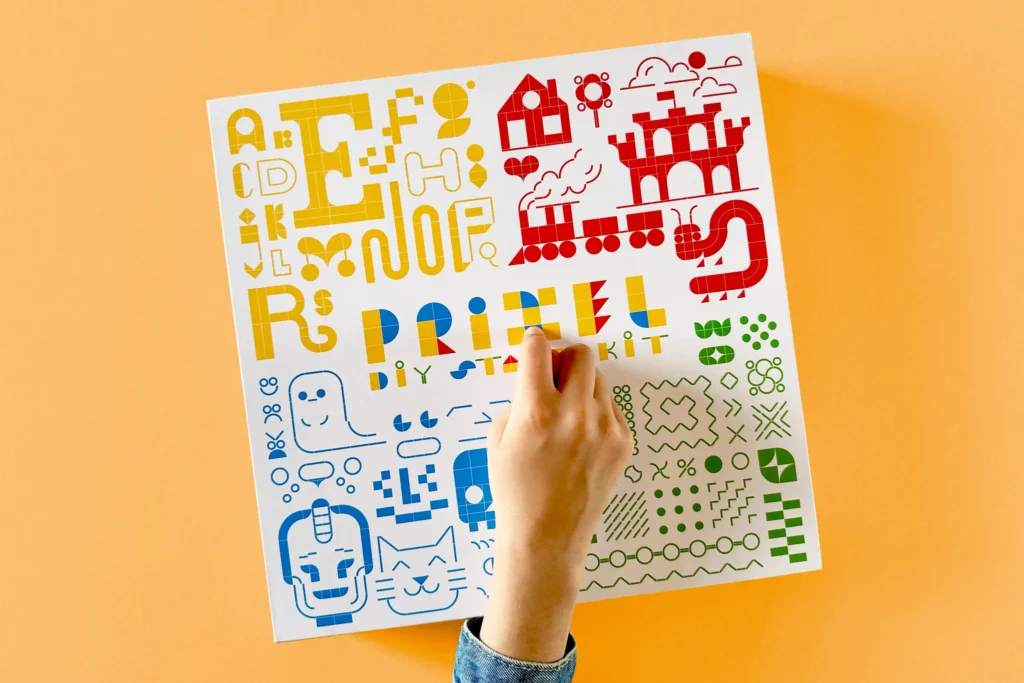
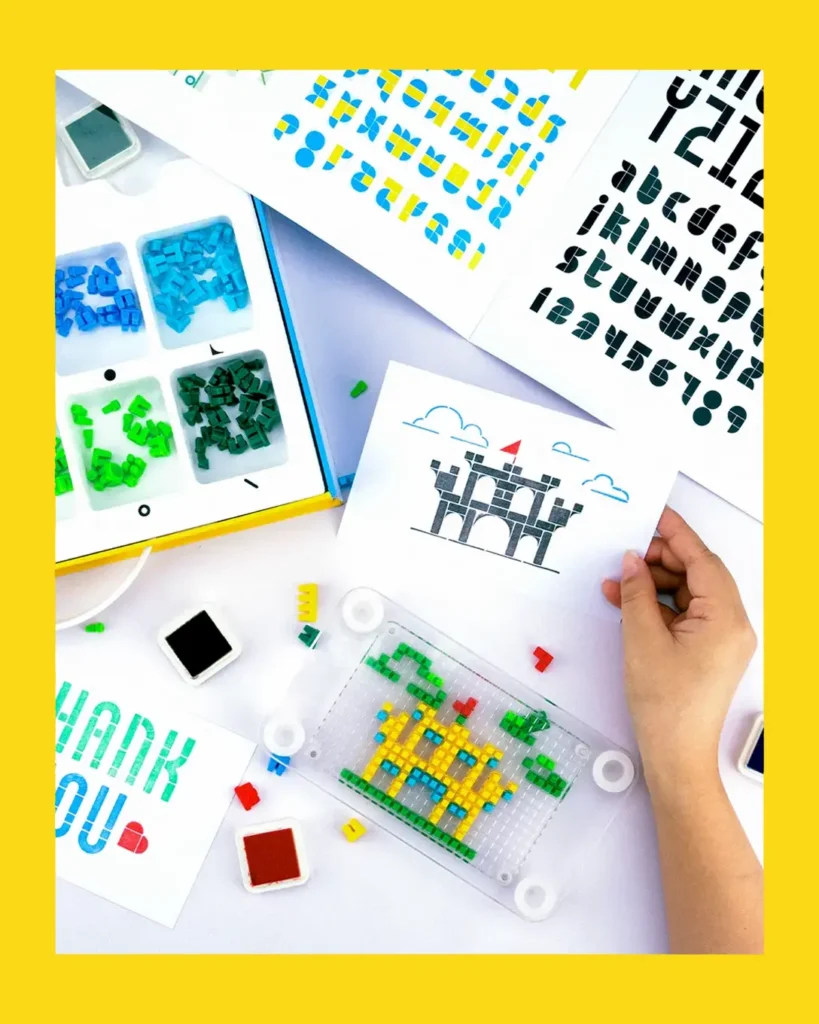
Some objects invite you to slow down, to look closer, to use your hands in a way that feels almost unfamiliar in a screen-first world. PRIXEL is one of those objects. Part printing press, part puzzle, part design system, it sits somewhere between a childhood toy and a serious creative tool — playful, tactile, and quietly obsessive in the best possible way.
Created by Brandon Gamm, PRIXEL has been in the making for more than a decade. What began as a clunky LEGO prototype slowly evolved through years of experimentation, iteration, and patient refinement into the kit it is today. Drawing on influences ranging from pixel art and letterpress printing to collecting, grids, and systems thinking, Brandon has built something that encourages curiosity over outcomes and process over perfection. We spoke to him about the long road to launching PRIXEL, the value of making things by hand, and what children can teach us about creating without fear.
Where did the idea for Prixel come from, and how long did it take to bring it to life?
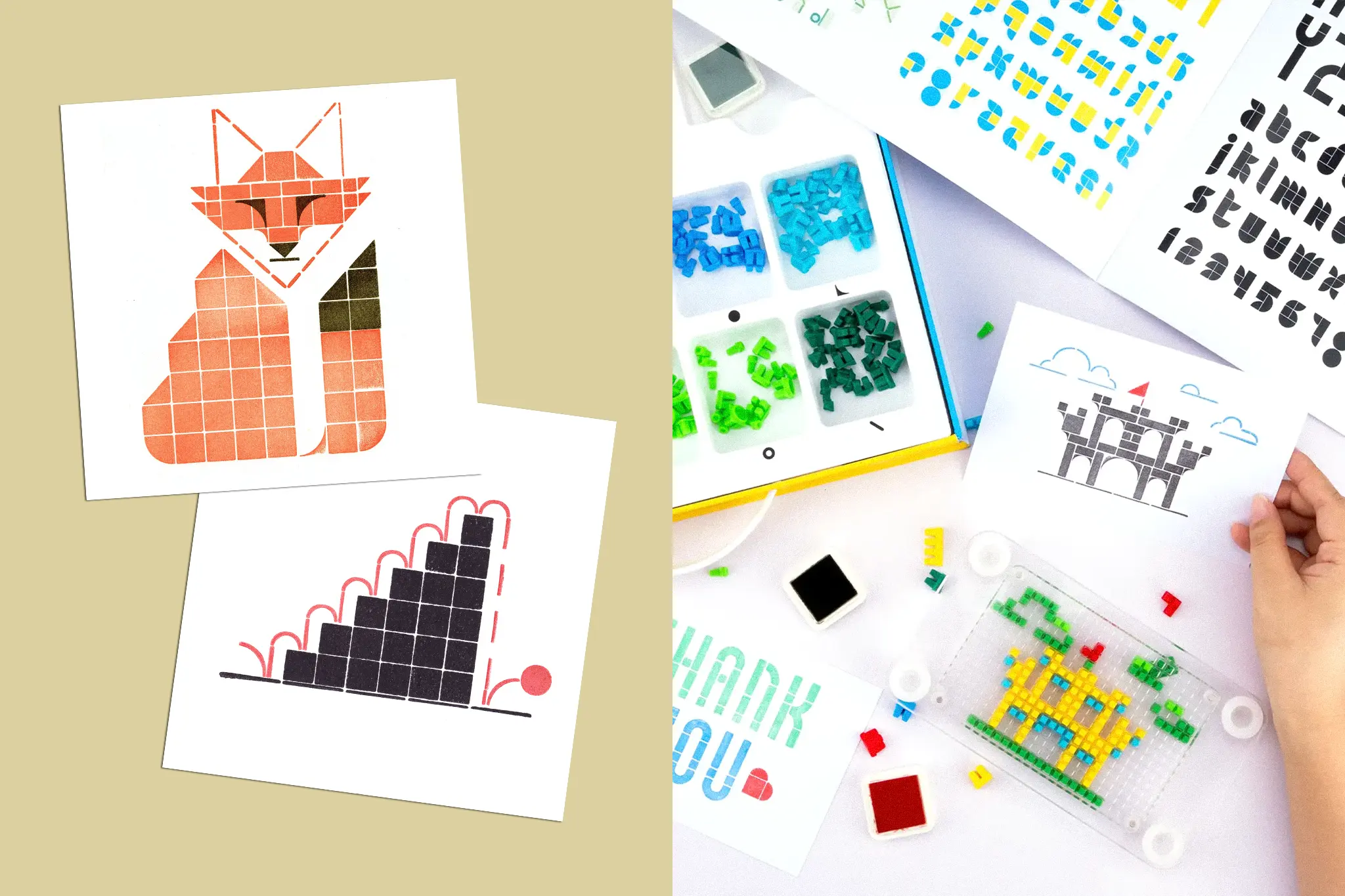
The idea came from a melting pot of influences: LEGO, pixel art, typewriter art, rubber stamps, and letterpress printers like Physical Fiction and Starshaped Press. It took about 10–12 years to bring PRIXEL to life, depending on which milestone you count from. I had the basic idea and first clunky LEGO prototype in 2011. After about five years of intermittent prototyping, I arrived at the current form, then spent another five years playtesting to figure out what should actually be included in the kit. In 2021, I released the first version of the kit. I handmade these (with help from friends) for two years, casting silicone parts, CNC-milling presses, thermoforming trays, and so on, before taking the plunge into contract manufacturing in 2023.
What’s your earliest creative memory, and did childhood play a role in shaping your creative mindset?
My earliest creative memories were collecting stamps, sports and Pokémon cards, coins, and rocks—classic nerdy kid stuff. I remember sitting on the floor in my room, poring over tiny objects with a magnifying glass for hours, and organizing them. I think collecting spurred a love for systems and modularity. I also drew a lot and was naturally pretty good at it. Besides gory ninjas and video game characters, I drew designs for inventions; everything from fonts to magnetic cars. Drawing was a way for me to collect things I enjoyed or work out ideas I had. It felt good to bring something from my imagination to life and share it with people. This is probably why prototyping is still my favorite part of PRIXEL.
As I grew older, art became more competitive. By the time I was a teenager, I started to become paralyzed by perfectionism (still working on that, by the way). It would take me weeks or sometimes months to finish assignments because as soon as I got one part of the piece perfect, I’d be afraid to make a mistake and screw the rest of it up. Then I discovered Adobe Illustrator, and cmd + Z was so liberating. I could make mistakes in that digital world, or duplicate an illustration and safely branch off in another direction without worrying about losing my progress. I loved how digital art allowed me to effortlessly duplicate, iterate, undo, save, and share.
When it came time to go to college, I debated whether to study engineering or graphic design. I prayed for a sign to help me decide, and later that week, I opened a fortune cookie that read, “Art is your fate. Don’t debate.” Amazingly, I ignored this sign and did a year of civil engineering before switching to graphic design. At the time, I didn’t realize art could be systems-driven, too. It’s cool how PRIXEL has enabled me to be a bit of both: an artist and an engineer.
What values or beliefs sit at the heart of your work?
Just like games require rules for play, constraints are a sandbox for creativity. As I graduated from college and started working as a UI/UX designer and iconographer, I used grids to make my work more consistent and systematic. I found it soothing to set up a grid system and let the text and images flow into those spaces. The scary blank canvas becomes a set of limited viable options to choose from. The question becomes less “where do I begin?” and more “which element should break the grid, and why?”
Did you have children in mind when designing Prixel?
Honestly, I created PRIXEL for myself and other adults. But, of course, it’s also appealing to kids. I wanted a printing system that felt fun and playful, like a toy, but one that could still be used for “serious” work. I hesitate even to call it a “toy,” because that word usually implies cheap, disposable, gimmicky things. Why shouldn’t toys be legitimate tools (LEGO) or professional tools be playful (Teenage Engineering synthesisers)?
Ultimately, I hoped that PRIXEL would help adults (like myself), who sometimes struggle to create art in the same unselfconscious way children do. In that sense, children were an inspiration for the state of mind I want PRIXEL to encourage.
Why do you think it’s important for children to make things with their hands in today’s digital world?
Any opportunity to use your hands results in a much richer experience than interacting with a screen. Sawdust, crayon shavings, the smell of ink, the sound of crumpling paper—all the messy things the digital world erases in the name of productivity—bring kids back to reality. The digital world can be a lot like Plato’s cave—flickering images you see but never touch, which can be confused for reality as you disengage with the world around you.
There’s a wonderful immediacy and preciousness of physical art. If a child draws a dozen variations of a house, they’re not just improving their ability to draw in perspective—they’re learning how to see. Every attempt teaches them to break it down and understand it more deeply. Besides that, making stuff in the real world has a presence that digital stuff doesn’t. The finger painting ends up on the fridge or in a box of mementos, to be rediscovered later.
Have you seen any surprising or memorable ways children have engaged with your product?
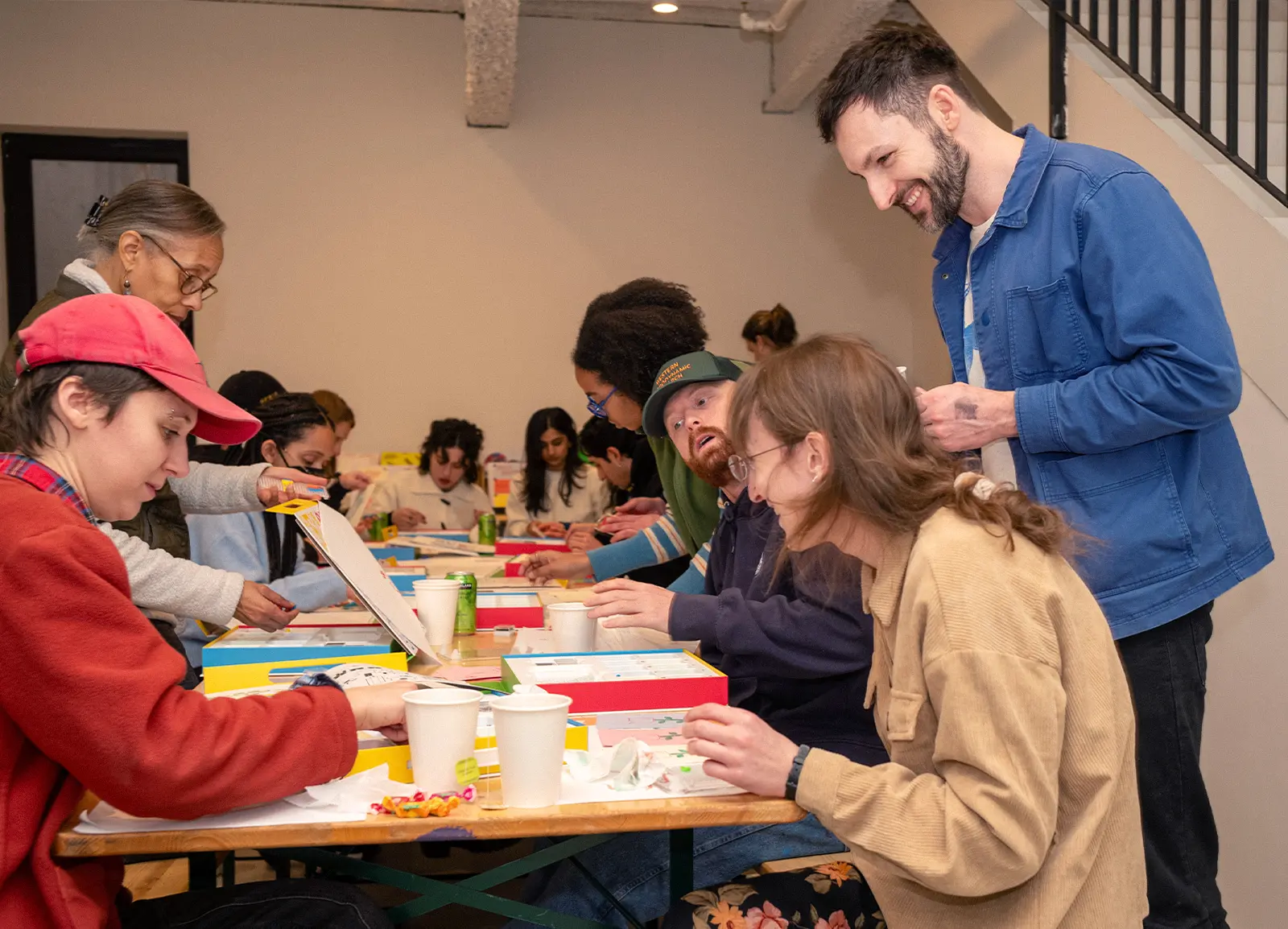
The silicone parts of PRIXEL are color-coded, so children under 5 tend to arrange the pieces for their innate aesthetics instead of a print design. They’ll fill in every hole on a setup plate to create a design that might look like abstract gibberish when printed, but has a certain beauty as an object on its own. When I’ve done demos or holiday markets in the past, I’ve found that adults tend to use the premade sample designs to print a quick card and move on, while kids will drop everything and spend 30 minutes creating their own version of a cat (to the chagrin of impatient parents). Children seem much more open to process compared to the outcome-driven adult mindset. There were three main challenges: financial, tiny-big decision-making, and manufacturing.
— Financial
To focus on the business full-time, I threw out all personal financial stability for the last several years. I started a second business (which failed) and did ad-hoc freelance work while my wife became the primary breadwinner. I asked friends and family for startup funds. I took out a second mortgage on my house as collateral for a business loan. I played the balance transfer game with credit cards. I applied for grants (and got a few). I even withdrew money from my retirement savings to pay my bills. The outlook has recently become much brighter though.
— Tiny-Big Decisions
I started by prototyping dozens of shapes and sizes before narrowing them to a manageable set. Then came questions of quantity, color-coding, and press dimensions—all the small decisions where you know the range that works, but choosing and committing is the hard part. For example, “Should the kit contain 8, 9, or 10 square pieces?” The way forward was to treat every prototype as an experiment, accept mistakes, and move on. Going through a business incubator program at Tech Valley Center of Gravity in 2020 gave me mentorship, accountability, and deadlines, which helped cut through the decision paralysis, too.
— Manufacturing
I finished my third production run this year. Each run has presented one or two serious issues that affected every kit in ways that could make them unusable. These have felt overwhelming or impossible to solve at times, but somehow I’ve always found a way through… Like the time I spent 50 hours renting a laser cutter to correct 2,000 defective parts. But that’s the nature of making things. The human hand is still very much alive in manufactured goods.

What does a typical day look like for you, and how do you make space for creative play or downtime?
I have a pretty mundane routine, but I love it and wouldn’t change a thing. Every day is some combination of meditating, lifting weights with my neighbor and friends in my backyard (“Rain or Shine Gym”), working out of my coworking office, and hanging out with my wife or friends or doing BJJ in the evening. Saturdays are for rest and relaxation. Right now, I’m writing this from China, and the routine is more or less the same. It’s like a grid for my life. I show up to these little daily and weekly milestones, and it frees me to stay aware and focused the rest of the time.
Do you have any creative rituals, routines, or tools you swear by?
I keep a deck of Oblique Strategies cards by my desk. Created by Brian Eno and Peter Schmidt, it contains over a hundred prompts to aid in the creative process. For example, ‘Does it need a frame?’ or ‘Humanize something free of error’.”
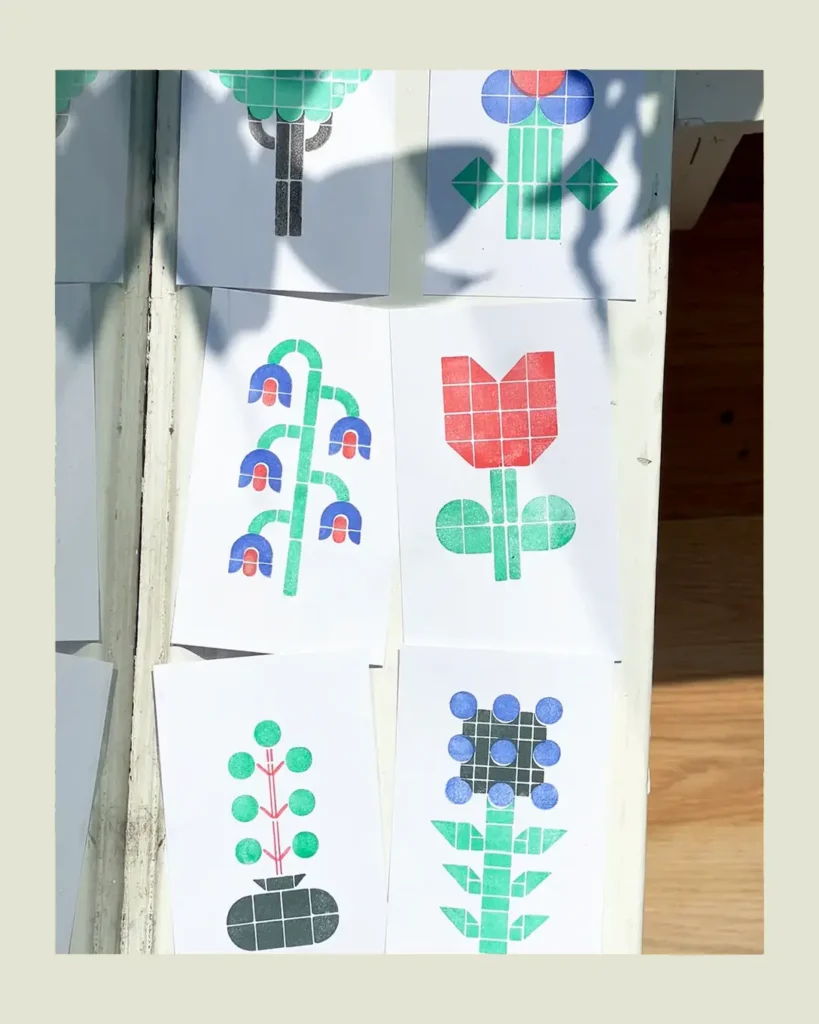
This desk is dedicated to printmaking and is separate from my computer desk. I like to make a quick print in the first 10-15 minutes after I arrive at my office, before I’m sucked into computer work, and the separation helps me stay focused. I find a theme that I can iterate on, like “flowers,” “buildings,” or more recently, “tombstones,” and then I’ll riff on whatever I did the day before. These themes typically begin by imitating someone else’s work that’s aesthetically similar to PRIXEL—most recently, the work of illustrators Marc David and Rose Wong. It starts out looking similar, an earnest imitation, but I keep iterating until I’ve created something distinct and idiosyncratically PRIXEL. It’s amazing how quickly a nice body of work can build up this way.
How does your home encourage creativity for your family, your children, or yourself?
For me, home is about spending time with my wife and cat, relaxing, and winding down from the day. I don’t feel particularly creative at home or even at my coworking office—I find I do my most creative work while traveling. Paring down my tools to a minimum, I’m inspired both by my new surroundings and relatively limited toolset to create things I might not have thought of otherwise.
“I hope PRIXEL helps future generations see the hidden patterns in the world around us (both natural and human-made). I hope it helps people get unstuck if they’re feeling a creative block. And perhaps most of all, I want them to find that work and play don’t have to be mutually exclusive.”
Is there anything else you would like to add or tell us of any upcoming projects we should know about?
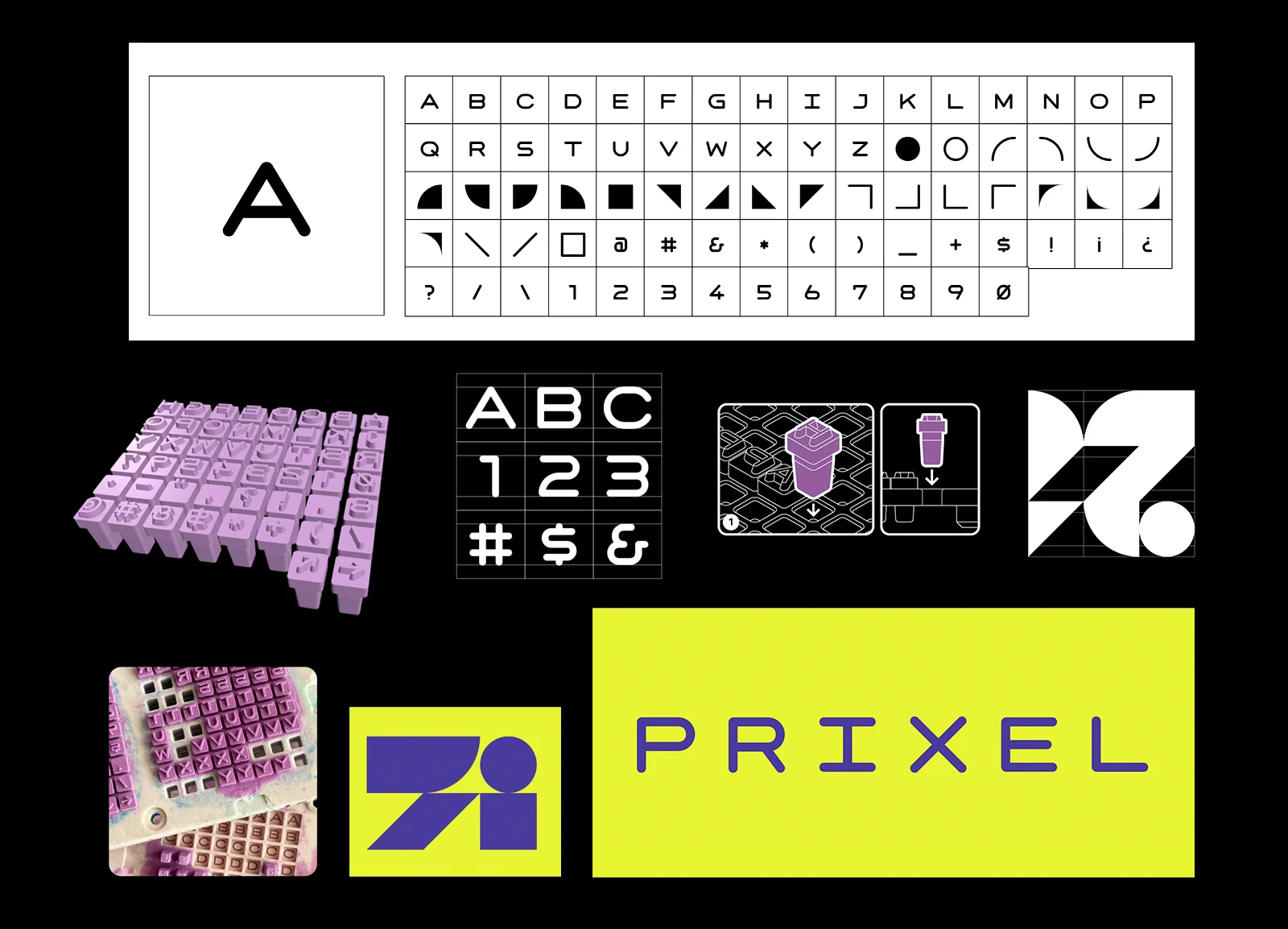
We recently released a letter set add-on called PRIXEL Mono. I always wanted PRIXEL to be, first and foremost, about playing with basic geometric shapes, and for people to create their own letterforms from those building blocks. But sometimes it’s nice to be able to just label something as concisely as possible. The font, designed in collaboration with Otherwhere Collective, was meant to be playful—the letters can be used to make faces and other illustrations, in addition to setting regular text.