At the start of 2025, my youngest child was diagnosed as autistic. He was five. The first questions were immediate and practical. How do you explain it? When do you say it out loud? What will his future look like? And, just like many other parents at the beginning of a neurodivergence journey, the search for reassurance starts quickly, not just for the child, but for yourself. There’s often an assumption that neurodivergent people are inherently creative, that they see and experience the world differently. For many children in a school system, that idea can feel at odds with reality. Difference isn’t always recognised (or understood) in the way you might hope, but for many neurodivergent adults, creativity becomes the place where things finally make sense. Art, writing, music and making offer a way to express something that’s harder to articulate elsewhere.
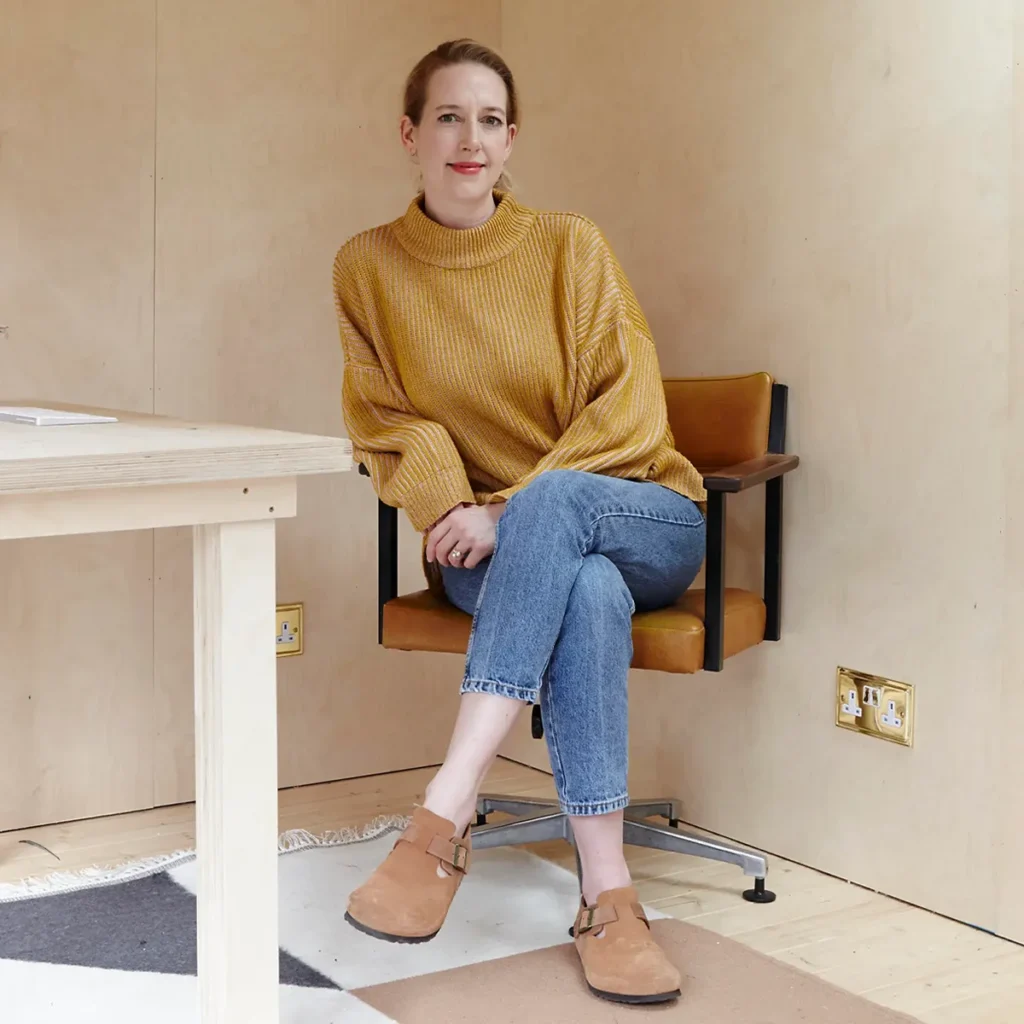
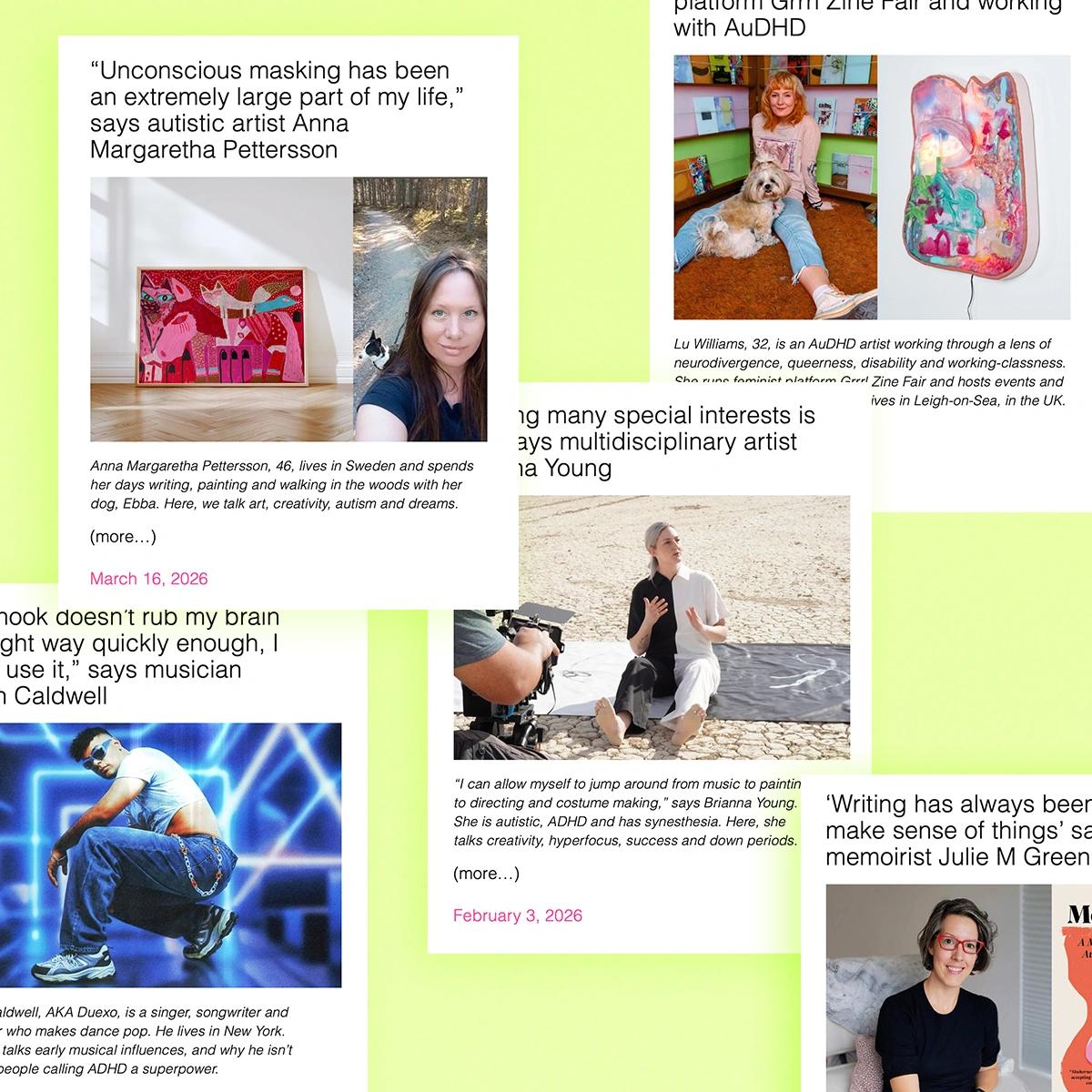
For writer Annie Ridout, that idea sits at the centre of We Hyperfocus, an arts platform and magazine dedicated to neurodivergent creatives. Bringing together artists, writers and makers, the platform offers a unique voice that’s changing the narrative around neurodivergence. We caught up with Annie to hear more about how the project came together.

What was the driving force behind setting up We Hyperfocus, and what gap did you feel it was responding to within the creative landscape?
When my children were really little, I had this wild creative drive. I’d get them down for a nap and hammer away at my laptop, writing articles and books. A woman I knew locally said: how are you so productive? And I didn’t know the answer. It wasn’t until I started discovering my children’s neurodivergence – and then my own, off the back of that – that I realised my productivity stems from my neurodivergent mind and ability to hyperfocus.
I felt that social media was awash with the ‘symptoms’ and ‘challenges’ linked with neurodivergence but there was less about the creativity that can accompany a mind that thinks differently. The colourful chaos of an ADHD mind; the beautiful order of autism; the ‘out of the box’ thinking and problem-solving in dyslexic people. And, for some, a mix of all three. So, I decided to shine a light on that side of neurodivergence.
I launched We Hyperfocus as a magazine, profiling neurodivergent creatives, and I also run creative workshops through the platform with my sister, Lauren. The Instagram account has grown so quickly, showing that there really is a need for this community.
I’m especially keen to shift the narrative so that parents of neurodivergent children feel less fear around ‘diagnosis’ – and in the lead up – and instead, feel hopeful about what lies ahead. There is still negative rhetoric online, and in the real world, around neurodivergence. It can scare us, as parents. But we have the power to change the conversation: for our generation, our children’s generation and beyond.
Has working on We Hyperfocus shaped your approach to parenting neurodivergent children, and has it influenced your family life in unexpected ways?
It can be hard knowing when to talk to your child about their neurodivergence. Some children might not want to talk about it, or perhaps they feel ashamed. So, launching We Hyperfocus has helped me – and, I’m told, others – to share the stories of neurodivergent creative grown-ups, which gives our children context. ‘Look, here’s a dyslexic/autistic/ADHD artist who makes incredible art like this…’.
Our neurodivergent children need role models. They need to feel hopeful about their futures, especially if school is hard for them. So, running the platform has opened new, exciting conversations within our family, and I hope that it’s shown my – very creative – children what the path ahead could look like, for them.
What role does creativity and self-expression play in supporting neurodivergent children’s confidence, identity and wellbeing?
Some dyslexic children will excel when it comes to creative lessons, and the arts. This is an area where they don’t feel ‘behind’, because there is no assessment or metric for the arts, at least not in primary school.
Free play can be crucial for autistic children who struggle socially as here, they can connect with other children without the pressure that might come from having to discuss ideas in front of a class, or in pair-work or group work. Running around in the playground, feeling free, experimenting, working together with your hands (building/making) rather than through dialogue.
“From what I’ve seen and understand, all neurodivergent children thrive on having some autonomy. This is what we might find through play and creativity.”
What kinds of conversations do you have about creativity with your own children, and how do you encourage them to explore it in ways that feel natural to them?
I have always tried to be relaxed about mess, at home. As soon as my children were sitting up, I’d get them involved in baking cakes, letting the egg shell drop into the mix as they cracked the eggs and picking it out later; flour being sieved all over the table and floor. I wanted my children to feel they could try things out and that it was ok if it got messy, or didn’t work out as they’d planned. Now, they do a lot of baking on their own.
I also make sure there is always a pile of paper on the kitchen table, and a big biscuit tin full of pens and pencils. I notice my children sketching what they see around the room, or drawing each other, once they’ve finished their food (or, halfway through eating, but I don’t mind that). I let them share my art materials, too, rather than palming them off with the shit cheap ones. Lovely sketchpads, pastels and paints.
I haven’t really answered the first part of the question about ‘conversations’ because we don’t have them all that much. Rather, I lay out the materials and let them get creative. I also take them to creative workshops in the holidays, and we’ve started committing to one online art workshop a week, on a Monday. This week, we studied drawing with ink and dip pens. We put out snacks and drinks and all made art together, instructed by an artist.
Through your conversations with neurodivergent creatives so far, have you noticed shared experiences or patterns in how creativity showed up during their childhoods?
Quite a few of the people I’ve interviewed have mentioned a teacher who was instrumental in showing them the creative path ahead. A teacher who saw their passion and talent, when others perhaps didn’t.
One illustrator, Jess Knights, had an art teacher who popped a book about illustration on her desk. She said she didn’t even know what illustration was, at the time. Now, she’s a professional illustrator.
An actor, Kerry Nicole Davies, struggled through the academic side of school because of dyslexia but her form-room was in the art department and she was given free rein to use the art materials whenever she liked. This, teamed with an inspiring drama teacher, sparked something in her, and it never left.
The comedian Sanjay Lago had a drama teacher who he said built his confidence up and made him realise it was a career path he was interested in. A lecturer at drama school then suggested he look into dyslexia and neurodivergence, which he welcomed – ‘It felt like the final jigsaw piece on how my brain works,” he said.
So, teachers can be really important. But also parents. Having parents who cherish you, as you are, and encourage you to follow your creative dreams.
Final Thoughts
As a parent, I want my son to grow up believing that anything is possible by embracing who he is and feeling comfortable with himself. We encourage creativity not as a coping mechanism, but as a strength. A way of thinking that belongs in the world.
Platforms like We Hyperfocus matter because they change the way we see the creative potential in people who have spent too long being misread. They remind neurodivergent people that difference is not a disadvantage, and that being understood can be transformative. For that, I’m grateful to Annie and hopeful for the world my son grows into.