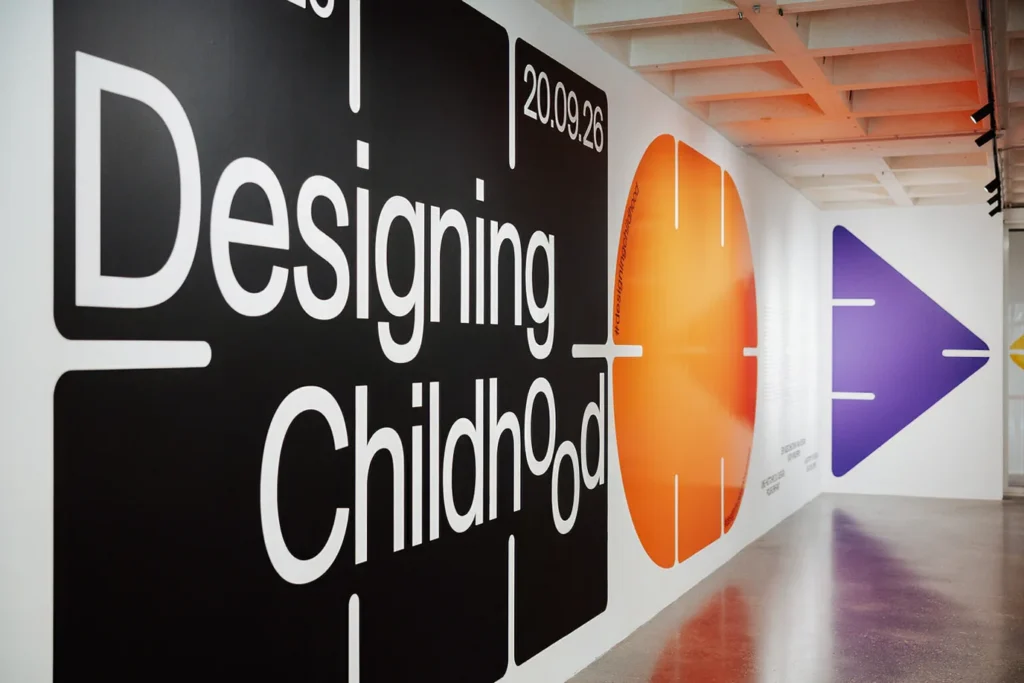
At what point does design start to shape us? For many of us, it’s in childhood, somewhere between our first toy and the first space navigated alone. It’s the question sits at the centre of Designing Childhood, a new exhibition at the Design Museum Brussels. Bringing together objects, furniture, graphics and environments made specifically for children, the exhibition looks at how design has long played a role in framing early experiences, often without us noticing.
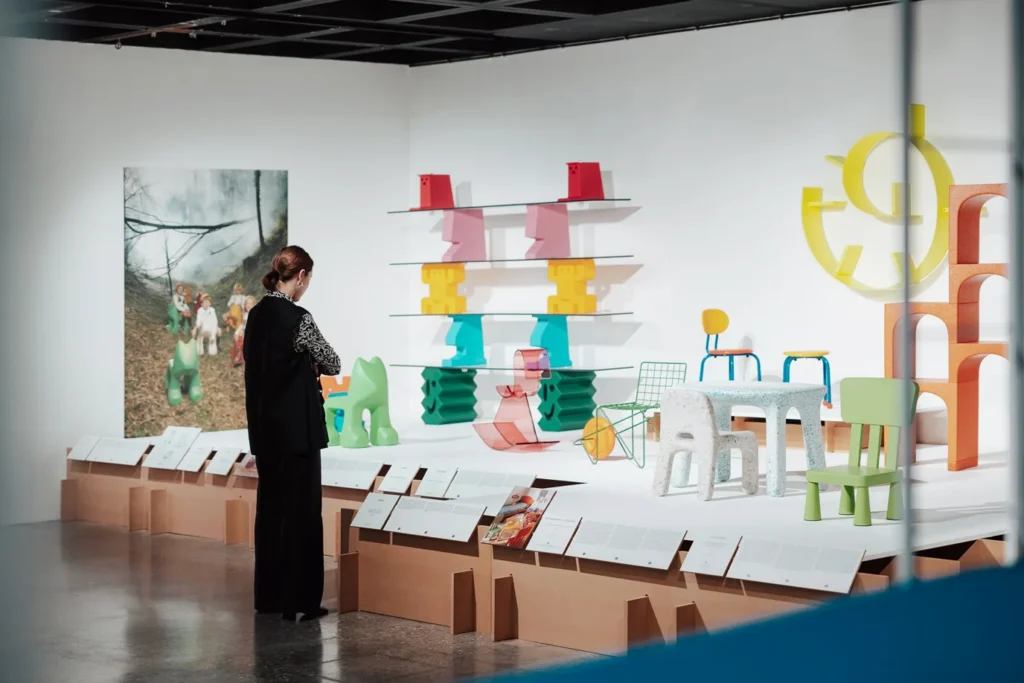
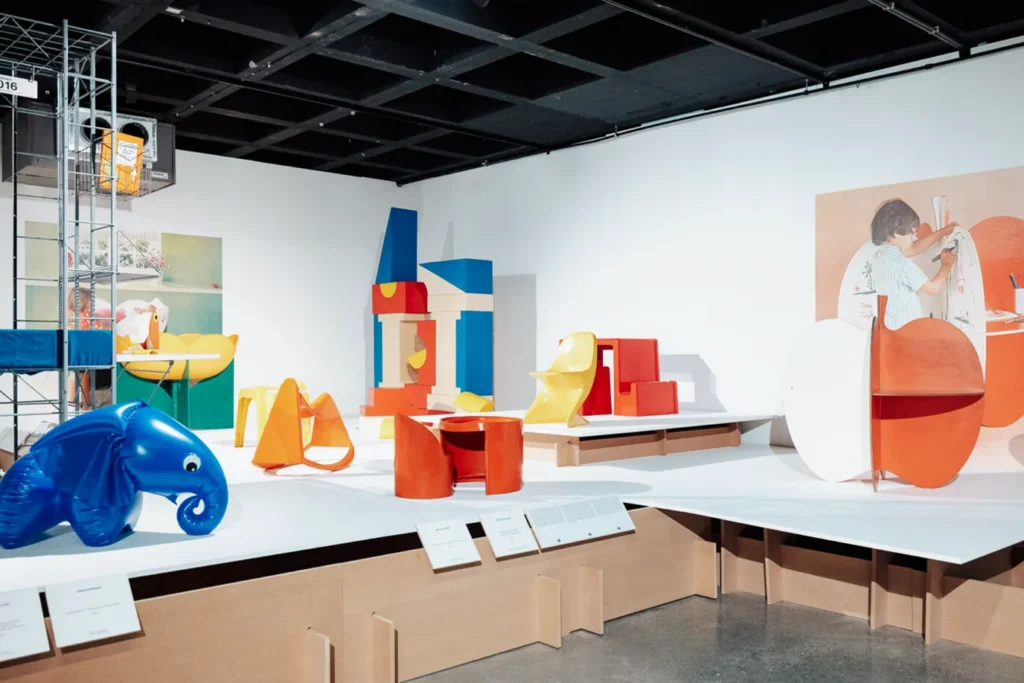
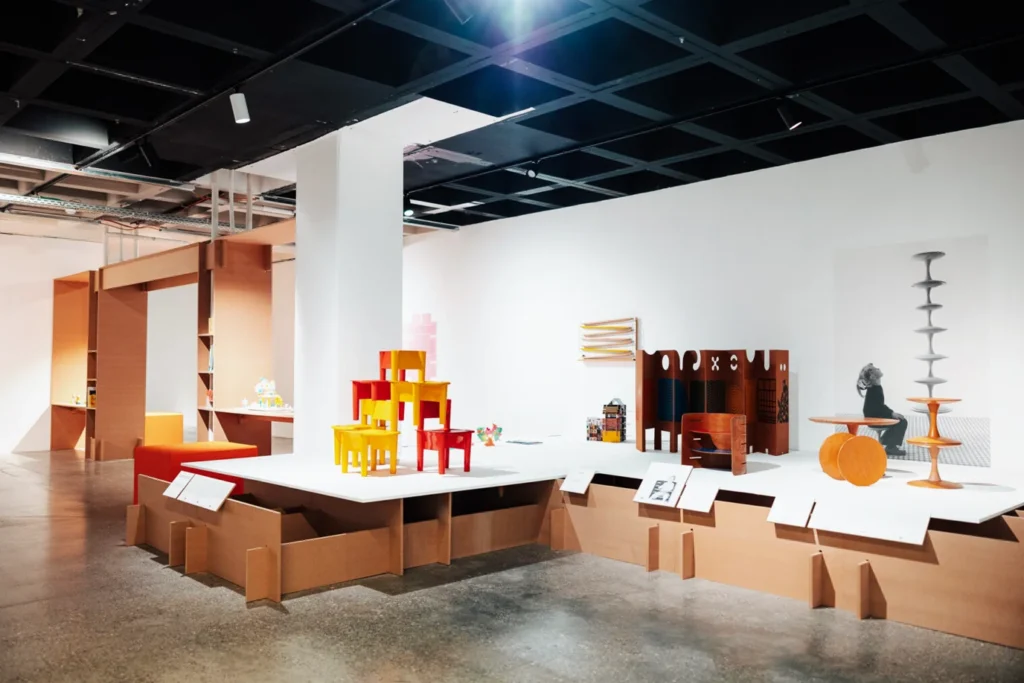
Rather than separating toys from the wider design world, the exhibition places them alongside architecture, learning tools and everyday objects. A chair becomes more than it’s function, a book becomes more than a story, shaping how images and language are first understood. Even playgrounds, often overlooked, appear here as carefully considered systems, built to guide movement, risk and imagination.
Many of them items on show reflect the values of the time they were made, from post-war ideas about education and development to more recent approaches that place creativity and autonomy at the centre of childhood. What emerges is a shifting picture of what it means to design for children, and who gets to decide what that looks like (a subject well explored in our Meet The Makers series).
Some pieces lean into bold colour and playful form, others are more restrained, almost adult-like. Seen together, they suggest that designing for children feels like an ongoing conversation between function, freedom and control. Importantly, the exhibition doesn’t feel nostalgic. While there are plenty of historical references, the focus stays on how these ideas continue to evolve. The show poses questions that point towards what childhood might look like next, and how design will inevitably shape that too.
What Designing Childhood does well is lets the objects take centre stage. For parents, the show offers a reminder that the objects our children interact with everyday are shaping their way of seeing our world.
Running until 20th September 2026, Design Museum Brussels.
Trending Now
Anywhere Book Club turns reading into play, conversation and connection. View Article Joshua Saunders turns his daughter’s handwriting into a typeface that grows with her. View Article Meet The Makers: Le Puzz’s Michael Hunter on Vintage Vibes and Modern Mischief. View Article From Beats to Melodies: Innovative Instruments for Young Musicians View Article The Art of Seeing: How Photography Helps Kids Develop Creativity and Confidence. View Article